
Commercial and Flat Roofing
Flat roofs fail differently from pitched ones. Water does not run off quickly, so it finds every seam, every split in the flashing around a rooftop unit and every low spot where the deck has settled. A small leak over a stockroom or a church fellowship hall can go unnoticed until ceiling tiles start falling.
We repair, restore and replace flat and low-slope roofs on retail shops, offices, warehouses, churches and small industrial buildings around Florence. That covers single-ply TPO membrane, modified bitumen, roof coatings, and the metal low-slope roofs common on shop buildings. We also fix the drains, scuppers and flashing that cause most commercial leaks.
Flat roof systems we work with
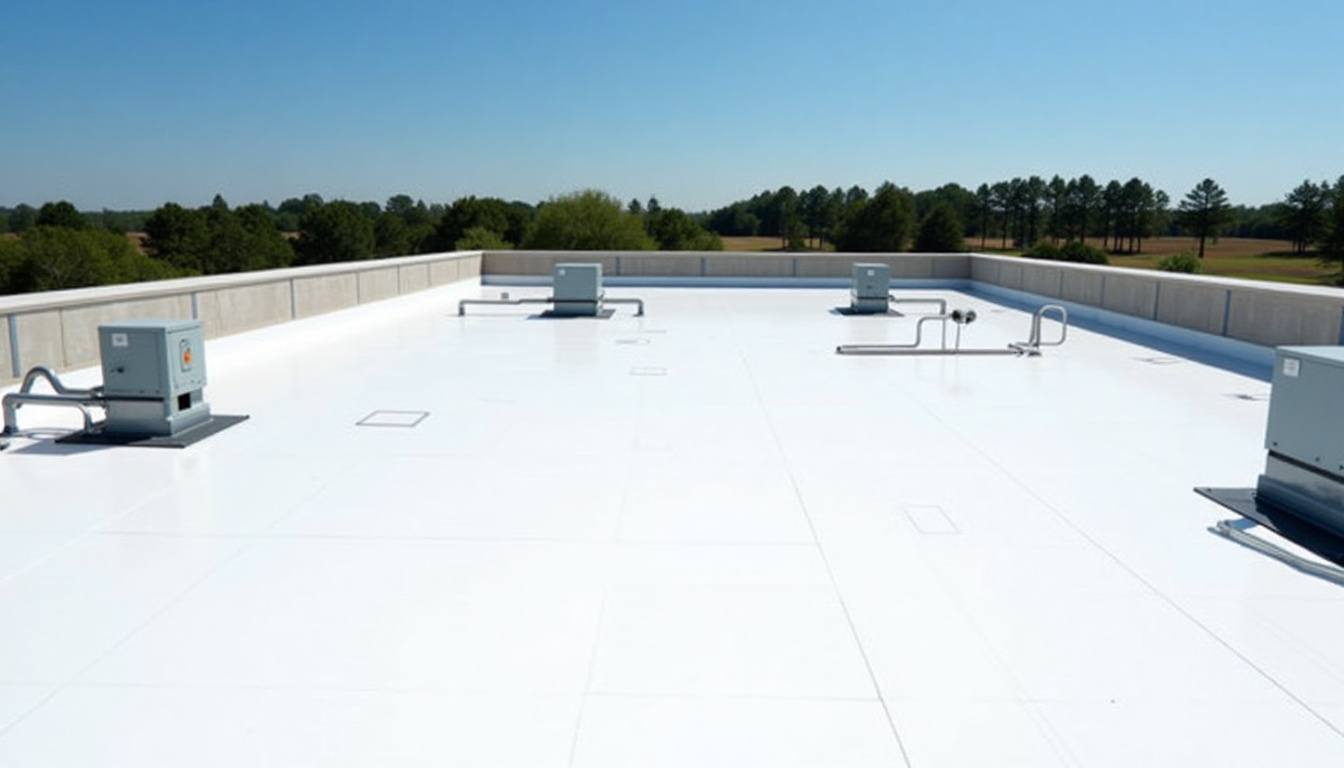
TPO is a white single-ply membrane, heat-welded at the seams, that reflects a lot of summer sun and keeps the space below cooler. It is the most common choice for new flat roofs and re-roofs on commercial buildings now. Modified bitumen is a rolled asphalt-based membrane, often found on older buildings and smaller roofs, that holds up well to foot traffic and is straightforward to patch.
Many shop and warehouse buildings have low-slope metal roofs instead, and those have their own set of problems with fasteners and laps; the steel side of what we do covers those panels in more depth. Whatever is up there now, we start by finding out what it is, how many layers are on the building, and whether the insulation under it is still dry. On many older buildings we find a newer membrane laid over one or two earlier roofs, which affects both the weight on the structure and whether another layer is allowed or a tear-off is needed. Core samples, small cuts that are patched the same day, answer that question without guessing.
Ponding and drainage
Water that sits on a flat roof for more than a couple of days after rain is called ponding, and it is behind a large share of commercial leaks. It adds weight, breaks down membrane and seams faster, and turns a small puncture into a steady leak. Close to four feet of rain falls here in a typical year, much of it in summer downpours, so a building in Florence that drains slowly gets tested often.
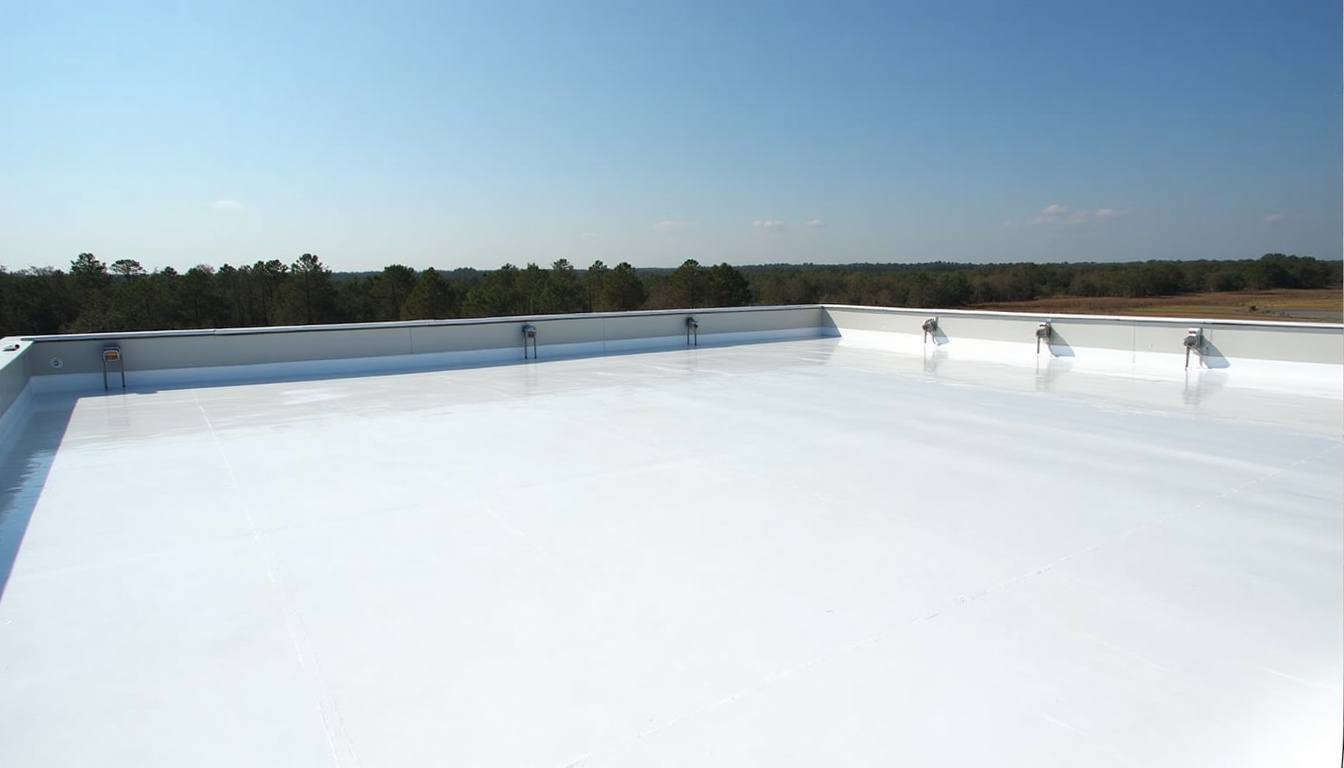
We look at the whole path the water takes: the slope of the deck, the roof drains and their strainers, scuppers through the parapet, gutters and downspouts. Clogged drains are the easy fix. Low spots can sometimes be corrected with tapered insulation or crickets that steer water toward the drains when the roof is redone. Getting drainage right is usually worth more than a thicker membrane.
Coatings and restoration
Not every worn flat roof needs to be torn off. If the existing membrane or metal is still attached, the insulation underneath is mostly dry, and the problems are aging seams and surface wear, a restoration may make sense. That means repairing the problem areas, reinforcing seams and penetrations, and applying a liquid coating across the roof.
A coating is not a cure for a roof that is holding water inside the insulation, and we will check before recommending one. Where it does fit, it can add years to the roof with much less disruption than a full replacement. On pitched homes the same thinking applies at a smaller scale, and our repair work on houses follows the same find-the-source approach.
Maintenance plans
Flat roofs reward regular attention. A scheduled check in spring, ahead of severe-weather season, and again in the fall, after summer storms and before leaves and pine straw pile into the drains, catches most problems while they are cheap. We clear drains and scuppers, inspect seams and flashing at curbs, vents and rooftop units, and photograph anything that needs attention.
After a named storm or a hard thunderstorm with hail, it is worth a look even if nothing is leaking yet. You get a short written report with photos after each visit, so you have a record for your own files, for a landlord or for an insurance question down the road.
A plan also gives you a known contact when something does go wrong. If a unit tech leaves a panel off on the roof or a storm drops a limb on the parapet, the building is already on our list and we already know its layout, drains and history. That shortens the time between noticing a problem and having someone on the roof, which on a flat roof is the difference between a patch and wet insulation across a whole bay.
Working around your business
A roof job should not shut down a business. We plan around your hours, stage materials so entrances and parking stay usable, and keep noisy work like tear-off away from opening time where possible. For churches we work around services and events. Rooftop units, signage and anything that needs a separate trade are coordinated ahead of time so nobody is waiting.
Commercial work inside Florence city limits generally needs a permit, so that belongs in the plan before a start date is set. We take on buildings across the region, east along US 76 as far as Marion, and our Marion page has more on the area. A flat roof gets priced from what the core samples and a walk of the whole deck show, and you get that number in writing.
Get your building looked at
Fill in the quote form with your name and a phone number. In the message box, tell us the type of building, roughly how big the roof is, what kind of roof you think it has and where it is leaking, if anywhere. The address is optional until we schedule the visit. We will call back to set a time to go up and take a look. The visit and the written quote are free.