
Storm Damage Repair
After a big blow, the phone lines and the parking lots at the hardware stores fill up at the same time. Trees are down, tarps are scarce, and trucks with out-of-state plates start knocking on doors. Most storm damage on a roof can be handled calmly if the first steps are done right: stop the water, document everything, then repair it properly.
We tarp roofs, remove limbs that have come down on them, repair wind and hail damage, and replace roofs that took too much. Along the way we photograph and write up what we find so you have something solid to hand your insurance company.
What Pee Dee storms do to a roof
Florence sits far enough inland that people forget how much hurricane weather still reaches it. Hurricane Matthew in 2016 and Hurricane Florence in 2018 both brought wind damage, downed trees and days of heavy rain to Florence County. The rain is often the bigger problem: a roof that loses a few shingles in the first hours then sits under steady rain for two or three days.
The everyday threat is the summer afternoon thunderstorm. Straight-line winds lift shingles and crease them so they no longer seal, even if they look flat from the ground afterward. Hail is occasional here, but when it comes it bruises shingles and knocks granules loose, and the damage shows up as leaks months later. Spring severe-weather season adds tornado warnings to the mix. Each kind of storm leaves a different pattern, and knowing which one you are looking at helps both the repair and the claim.
Right after the storm
Once the weather has passed and it is safe to go outside, walk around the house. Look for shingles, ridge caps or flashing in the yard, limbs on or against the roof, dented gutters and downspouts, and anything torn at the edges. Inside, check ceilings and the attic for drips and wet spots. Take photos and short videos of all of it with the date showing, before anything is moved or cleaned up.
Do not climb onto a wet or damaged roof, and stay clear of any limb that is touching a power line. Move valuables away from active leaks, put a bucket under drips, and if a ceiling is bulging with water, a small hole at the low point lets it drain into the bucket instead of bringing the drywall down. Keep receipts for anything you spend to prevent further damage, since policies often cover reasonable steps to protect the house.
Tarps and temporary fixes
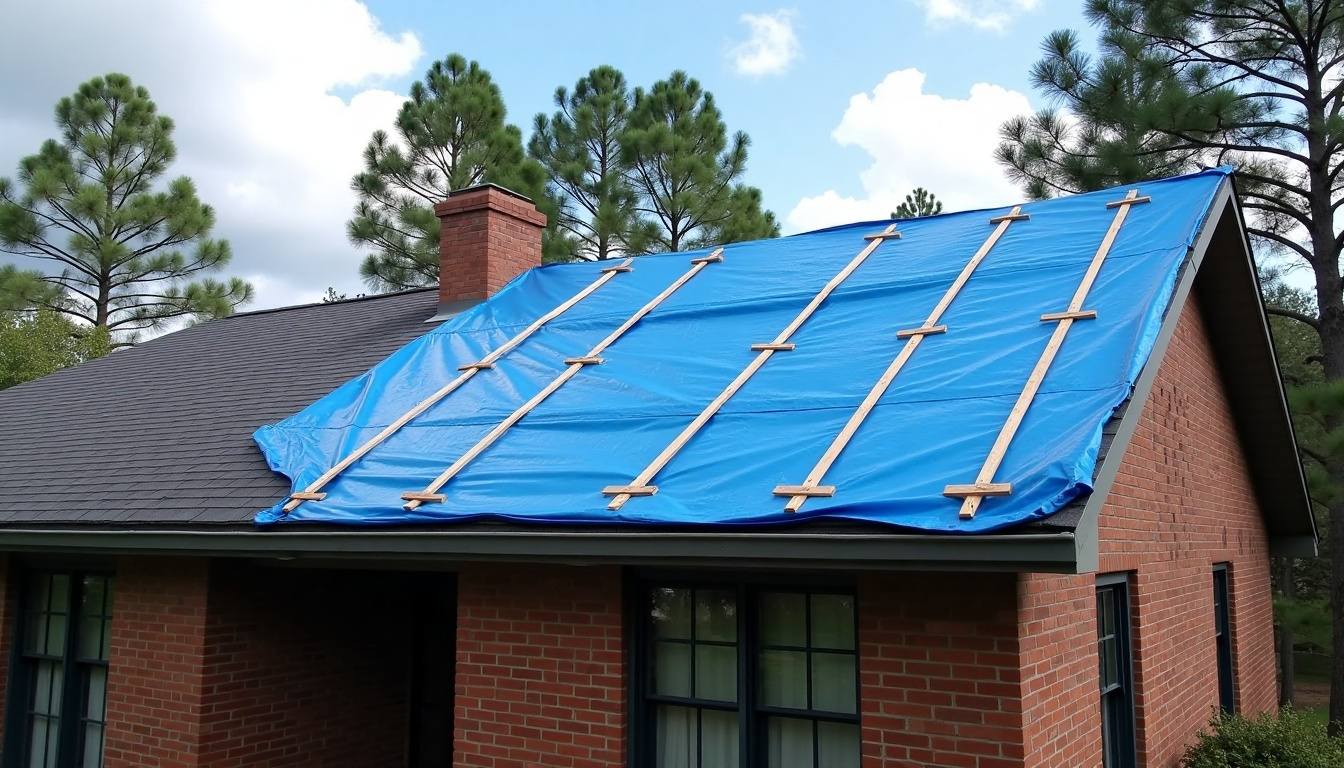
A good tarp is laid over the ridge, fastened with wood battens instead of just nails through the plastic, and sized to cover well past the damaged area so water cannot run under the edge. A bad tarp flaps loose in the next storm and lets in more water than before. We put on the first kind.
Temporary repairs can also mean sealing a torn section of flashing or nailing down lifted shingles until the permanent work is scheduled. Tell us in the message box whether water is coming in right now. If the damage is limited, the permanent fix may just be an ordinary leak repair once the weather clears.
Help with the insurance claim
We do not work for your insurance company and we do not make promises about what a claim will pay. What we do is give you a clear record: photos of each damaged area, what caused it, what the repair or replacement involves, and a written estimate. You can share those photos with your adjuster, so the damage that is there gets seen and nothing gets missed.
Call your insurer early and ask how your policy treats wind and named-storm deductibles, since those can differ from the standard one. If you have questions about how the process is supposed to work or feel a claim is being handled unfairly, the SC Department of Insurance publishes homeowner guidance and takes complaints. Be wary of anyone who asks you to sign over your claim at the door before they have even been on the roof.
Fallen trees and limbs
Pines and oaks are part of nearly every yard here, and after a storm a lot of our calls are about a limb resting on the roof or a trunk that came through it. The order matters. The tree has to come off carefully so it does not tear more of the roof on the way, then we check the rafters and decking under the impact point, not just the shingles, before anything is closed up.
A big limb can crack a rafter or truss without leaving an obvious hole, so we look from the attic as well as the roof. Where the framing is damaged, it is repaired before new decking and shingles go on. We cover the southern end of the county too, and our page on Lake City roofs goes into more of what storms do down there.
When the storm has passed
Small storm damage is usually a repair. Widespread creasing, hail bruising on every slope, or a roof that was already near the end of its life can mean a full replacement, and that conversation goes much smoother with the photos and the adjuster report in hand. Either way, the price comes after the inspection, in writing. Send the quote form with your name and phone number and use the message box to describe what happened: which storm, what blew off or came down, and whether water is getting in. We will call back, set a time, and get someone on the roof.